ICU-Acquired Weakness: Comprehensive Guide by Dr. Nikhil Patel

Critical Illness Neuromyopathy

Prevalence Statistics
Initially, the overall prevalence stands at 46%.
 Furthermore, it appears higher among COPD patients (35%) and asthmatics (36%).

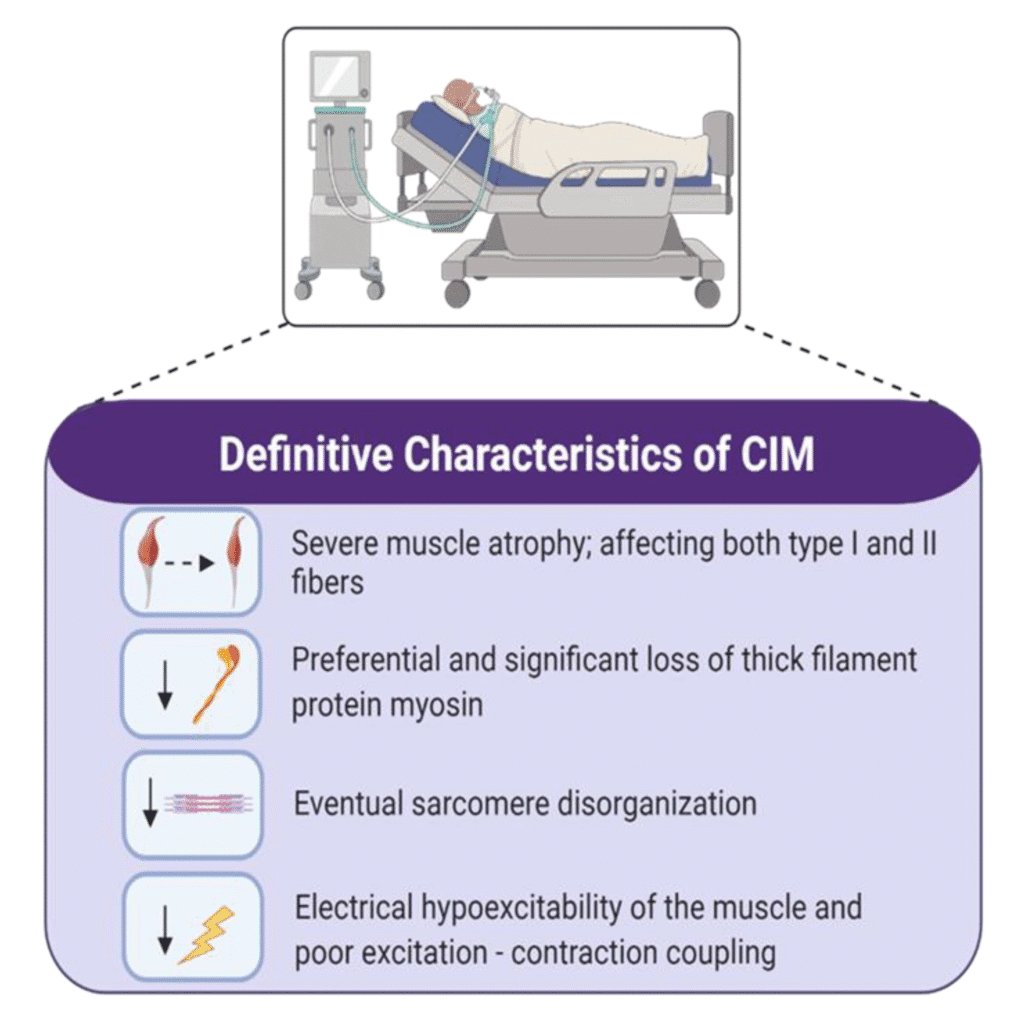
ijms 21 07840 g001

Definition:

Critical Illness Neuromyopathy (CINM) represents clinically detected weakness in critically ill patients without obvious cause other than critical illness. Moreover, it encompasses a spectrum of neuromuscular disorders that develop during ICU stays.

Risk Factors

Possible Risk Factors

Several factors contribute to the development of ICU-acquired weakness:
Advanced age, Female gender
Higher admission APACHE 2 score
Hypoalbuminemia
Hyperosmolarity
Parenteral nutrition
Renal replacement therapy (RRT)

Probable Risk Factors

Additionally, more strongly associated factors include:
Medications: NMBA, Steroids, Vasopressors
Antibiotics: Aminoglycosides, Colistin, Polymyxin-B
Critical Illness: Sepsis, Septic shock, MODS
Duration factors: Prolonged MV, Prolonged bed rest
Metabolic: Blood sugar fluctuations

Clinical Presentation

Critical Illness Myopathy (CIM)

Typically, CIM manifests with:
Prolonged ICU stay >2 weeks
Difficulty weaning from mechanical ventilation
Muscular weakness (Proximal >> Distal)
Facial symmetrical muscle weakness
Extraocular muscle weakness is rare

Critical Illness Neuropathy (CIN/CINM)

In contrast, CIN/CINM presents with:
Prolonged ICU stay >2 weeks
Difficulty weaning from MV
Limb muscle weakness/atrophy (Distal >> Proximal)
Loss of peripheral sensation (Touch, pinprick)
Reduced deep tendon reflexes
Sparing of cranial nerves

Diagnostic Approach

Clinical Assessment

Clinicians use the MRC Scale: 3 muscle groups per limb, total score of 60. Additionally, motor weakness ranges from monoplegia to quadriplegia. Furthermore, reflexes show absent DTR reflexes. Finally, sensory testing reveals a grimacing response only, with no muscle movement.

Diagnostic Challenges

However, several factors complicate diagnosis:

  • Poor patient communication
  • Altered sensorium
  • Limb edema
  • Effects of sedation and neuromuscular blockers

Management Strategies


1. Early Physiotherapy

Primarily, implement:

  • Early mobilization (supine to sitting)
  • Progressive walking programs
  • Bedside cycle ergometry
  • Passive mechanical loading
  • Functional electrical stimulation (FES)


2. Nutritional Support

Importantly, nutrition management should:

  • Avoid: Parenteral nutrition (detrimental effect)
  • Start early: Enteral feeding ASAP
  • Include: Amino acid supplements
  • Add: Omega-3 fatty acids


3. Glycemic Control

Furthermore, glucose management requires:

  • Prevent sugar fluctuations
  • Target: Euglycemic control (140-180 mg/dL)
  • Avoid strict glycemic control
  • Based on NICE-SUGAR study findings


4. Supportive Therapies

Additionally, provide:

  • Vitamin C & Vitamin E supplementation
  • Treatment of underlying disease
  • Avoid precipitating drugs
  • Optimal rehabilitation programs

Prognostic Implications

CINM significantly increases:

Significantly, CINM increases:

  • Risk of difficult weaning from the ventilator
  • ICU mortality (45%)
  • ICU length of stay
  • Hospital mortality
  • Reintubation rates
  • Tracheostomy requirements
  • 1-year mortality (20%)

Prevention Strategies

To minimize ICU-acquired weakness:

  • Minimize sedation and neuromuscular blockade duration
  • Implement early mobilization protocols
  • Maintain optimal glycemic control
  • Practice appropriate antibiotic stewardship
  • Optimize nutritional support
  • Conduct regular physiotherapy assessment

Dr. Nikhil Patel – Footer This Is Footer Code With CSS